


 News
News
On this page
Why Dynamic Mockups Rebranded
If you opened Dynamic Mockups this week and did a small double take, you saw it right. New logo, a refreshed website, and an updated in-app interface.
So let me answer the question a lot of you have been emailing us about: why did Dynamic Mockups rebrand?
We rebranded because the product outgrew its old identity. We started as a single mockup tool, and over the past couple of years we became a full visual engine that sellers, brands, enterprises, and agencies run across their workflows.
We’ve never really been just another “Mockup tool”, but the platform you can trust to create a visual layer for your business.
Nothing really specific changed how you already use our product, but the new look actually communicates clearly what you can expect from us in the future.
The rebrand isn’t a pivot. It’s us catching up to how you already use the product and the big plans we have for this journey.
Below I’ll walk through what stayed put, what actually moved, and the real story of how a mockup tool grew into a powerful visual infrastructure that currently uses 50k+ sellers.
If you just want the quick company version, that’s the note we published when the fresh look went live.
What Stayed the Same, and What Actually Changed
Nothing specific changed, but things are improving. Our plans are still the same. Our API becomes more versatile. The template library is growing constantly. Render quality and speed are improving every day and MockAnything rendering is below 800ms on average. The team is getting stronger and we hire new people constantly. Customer support is there 24/7.
So what changed? Only the visible layer.
- The logo: A cleaner mark that better explains our part in this POD ecosystem.
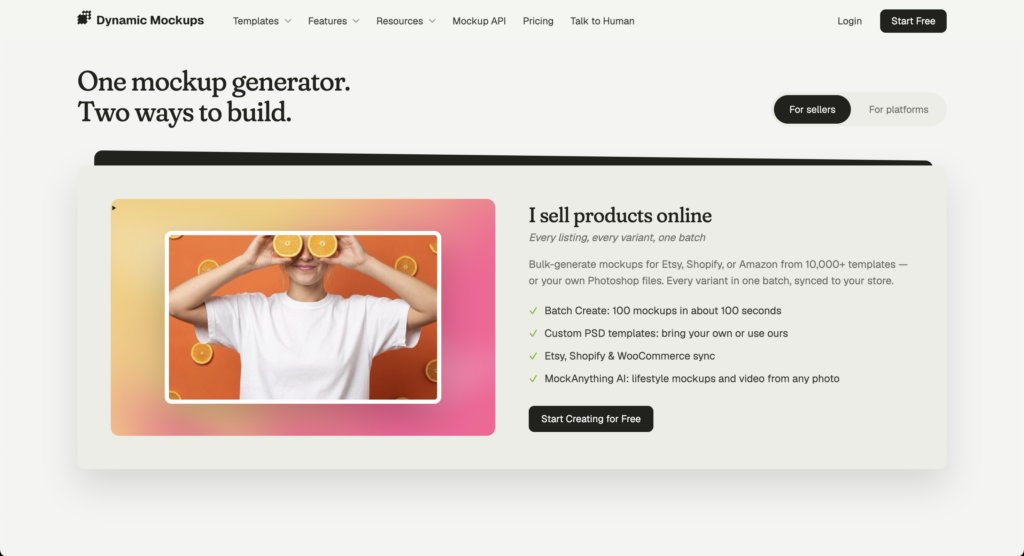
- The website: Rebuilt to explain the whole visual infrastructure, not just the mockup editor.
- The in-app interface: A visual refresh and easier navigation.
From a Mockup Tool to a Visual Engine
Here’s the honest story behind the name we keep using for ourselves now: Visual engine.
When we launched, the job was simple. You uploaded a design, dropped it onto a t-shirt or mug template, and downloaded a photorealistic mockup. One design, one product, one image at a time.
Then the way you used us started to change. Quietly at first, then all at once.
POD sellers stopped making mockups one by one. They started generating full sets from a single design drop, one artwork across dozens of products and colorways in a single pass.
Merch agencies began rendering entire client catalogs at once. A pitch that used to take a week of manual work in Photoshop started going out the same afternoon.
SaaS and e-commerce teams went a step further and embedded our editor inside their own apps, so their users could make mockups without ever seeing our name. Their product got a mockup feature almost overnight, and we got a channel we never had to sell.
By then we were something else: infrastructure, the layer other businesses build on top of.
An engine runs on demand and stays consistent at volume. It’s also programmable, so other software can call it and get the same result every time.
For you, that consistency is the part that matters. The same design renders the same way whether it’s one mug or ten thousand, at 2 p.m. or 2 a.m., in the editor or through code.
That kind of predictability is boring in the best way, and it’s the whole point of calling it an infrastructure.
The numbers followed the behavior. More and more of our render volume now flows through the API and bulk generation rather than the single-image editor we started with. The heaviest catalogs we render in a single job are far larger than anything we pictured on day one.
And the speed holds up under that weight. Our own benchmark shows what that looks like: the engine can render 750 mockups in 60 seconds, the kind of throughput that only matters once you’re working at catalog scale.
Speed isn’t a vanity number here. It decides whether a shopper sees your product on the live page or stares at a spinner, which is exactly how real-time render speed wins POD sales.
The rebrand finally says out loud what the product already does and how it integrates into your POD workflow.
The Belief the Rebrand Is Built On
Every rebrand should come from a belief, not a mood board. Ours fits in one sentence that we couldn’t stop repeating around the office:
“A great product that looks average online loses to an average product that looks great.”
Sit with that for a second, it will be worth.
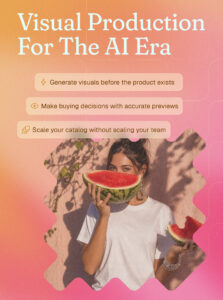
Your shopper can’t hold your product. They can’t feel the fabric or check the print up close. On the screen, the image is the product.
They can’t see the exact decoration methods on your print areas and get the feeling what they will get in the box once they order.
That’s why presentation is the quiet sales engine behind most online stores. The photo does the selling before your price or your reviews get a chance to.
Think about your own last purchase online. You judged it on a photo, maybe a short clip, and moved on in seconds. That snap judgment is where good mockups earn their keep.
Your listing competes in a grid of thumbnails. The one that reads clearly at a glance gets the click, and the click is where every sale starts.
The rebrand exists to reflect this conviction. We build the visual infrastructure that makes an ordinary listing look great, at scale and on any channel, so the better product gets a fair fight.
Our Vision, Mission, and Brand Pillars
Our vision is ambitious, but that’s what made our product one of the most competitive on the market.
To create a world where anything you can imagine can become something real people buy
This speaks more about what you can expect from us in the future.
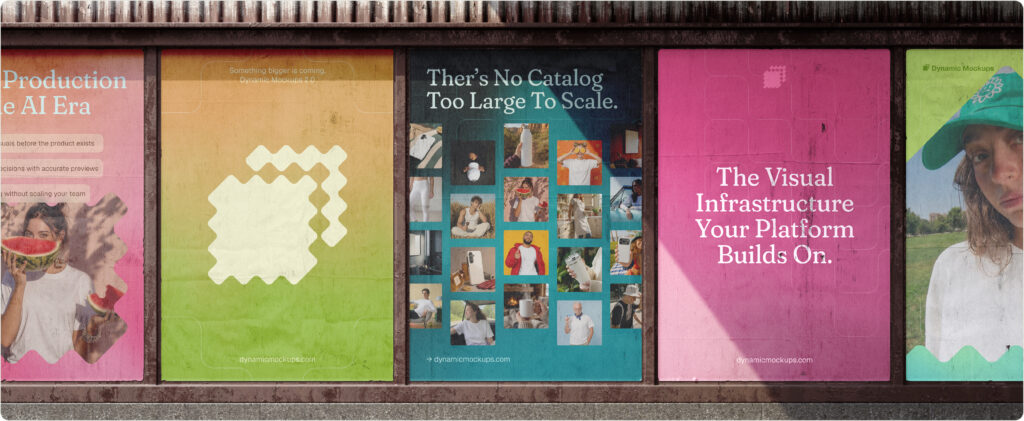
The gap between a great product and great product images disappears, so the visual quality is never the reason a good business loses.
Our brand pillars:
- The visual engine that runs in the background – turning your product data into visuals, at any volume, for any channel.
- Scale without friction – your catalog grows, but the team stays the same size.
- Visual infrastracture, not just another “Mockup tool”.
- Seen, found, sold – A great product that looks average loses to an average product that looks great.
This is finally wearing a look that matches the direction we are going.
What the Rebrand Means for You in 2026
Every workflow you built keeps running the way it did last week. What you gain is a clearer product and a roadmap that’s easier to follow, because the brand now describes the whole engine instead of a slice of it.
Clearer positioning also means clearer priorities on our side, which shows up as features that fit together instead of bolt-ons.
If you’re new here, a visual engine means you’re never stuck making one mockup at a time. You can generate a full product set from a single design, render thousands of images through the API, or embed our editor straight into your store. Same engine, three different ways to run it.
For those who are starting right now, check out the newest products we released:
Stitch AI – The first embroidery digitizing agent that reads your artwork, plans the stitches and hands you the photoreal mockup, the machine file and the production sheet in 15 seconds.
Lookbooks – Turn your product catalogue into a branded, polished presentation while the lead is still hot. Your client’s logo, on the products they asked about, rendered right.
And that’s the answer to why Dynamic Mockups rebranded: the infrastructure grew up, and the brand caught up.
One ask before you go. If you have a reaction to the new look, warm or brutal, hit reply and tell us. We read every message.
Take the new look for a spin and build your first workflow for free.
Showcase your E-commerce products like big brands, without costing a fortune. Sign up today. No credit card required. →
Frequently Asked Questions
Why did Dynamic Mockups rebrand?
We rebranded because the product outgrew its old identity. We started as a single mockup tool, and over the past couple of years we became a full visual engine that sellers, brands, enterprises, and agencies run across entire catalogs and many channels. The old ‘mockup tool’ description quietly went out of date, so the brand caught up to how people already use it.
Is Dynamic Mockups still the same product after the rebrand?
Yes. Only the visible layer changed. The logo is cleaner, the website was rebuilt, and the in-app interface got a visual refresh. Under the hood it’s the same engine doing the rendering, at the better quality and speed each day. Nothing about how you work changed.
Did the rebrand change Dynamic Mockups pricing or API?
No. Your pricing hasn’t changed, with the same tiers, same prices, and same free plan. The API hasn’t changed either, so the same endpoints, keys, and docs keep every integration you built running.
What does ‘visual engine’ mean for Dynamic Mockups?
An engine runs on demand and stays consistent at volume, and it’s programmable, so other software can call it and get the same result every time. For you, that consistency is what matters. The same design renders the same way whether it’s one mug or ten thousand, at 2 p.m. or 2 a.m., in the editor or through code.
Do existing Dynamic Mockups customers need to do anything?
No, do nothing. Your logins work, your API keys work, and your saved templates and mockups are all exactly where you left them. Every workflow you built keeps running the way it did last week. No feature is going away. What you gain is a clearer product and a roadmap that’s easier to follow.