



 Ecommerce
On this page
Lookbook vs Line Sheet vs Catalog: The Short Answer
A lookbook, a line sheet, and a catalog solve three different problems, and mixing them up quietly costs you sales. A lookbook is a visual, editorial piece built to inspire buyers and set a mood, and it usually hides prices. A line sheet is the plain ordering document that lists style numbers, wholesale price, MSRP, sizes, colors, and minimums, and it’s what buyers use to write orders.
A catalog sits in between: the fuller product reference that documents your whole range in one place, sometimes with prices and sometimes without.
As one fashion sales guide sums it up, “lookbooks give you the feel, line sheets give you the facts.”
Here’s the same breakdown at a glance.
| Document | What it’s for | Who it’s for | Shows prices? | Send it when |
|---|---|---|---|---|
| Lookbook | Inspire, tell the brand story | Buyers, press, influencers, shoppers | ❌ Usually hidden | You’re warming a lead or launching |
| Line sheet | Get the order written | Wholesale buyers, stockists | ✅ Wholesale + MSRP | The buyer is ready to order |
| Catalog | Document the full range | Buyers or consumers | ⚠️ Depends | Someone wants to see everything |
Use this when:
- Reach for a lookbook when you want to inspire rather than inform: launches, seasonal drops, or a cold buyer who needs to feel the brand first.
- Reach for a line sheet when the buyer is ready to order and needs prices, sizes, and minimums to do it.
- Reach for a catalog when someone wants the full range in one file, whether that’s a buyer comparing options or a shopper browsing.
Rule of thumb: lookbooks sell the feeling, line sheets close the order, catalogs cover everything.
What Is a Lookbook?
A lookbook is a styled, editorial presentation of your products. Its job is to make people want the collection. The specs come later.
A good one reads like a magazine spread: a cover, a few themed sections, and product shots that feel styled rather than catalogued.
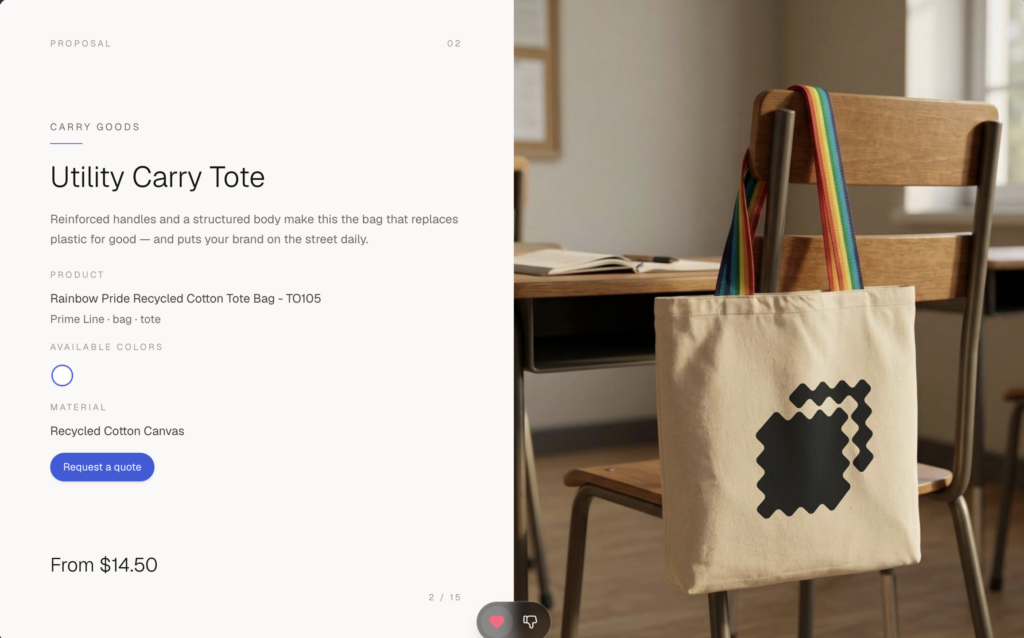
Think shot-on-model images, flat lays with props, lifestyle scenes, and a cover that sets the season’s mood. You can think of a lookbook as a visual portfolio of high-resolution photographs that carries minimal product data and leans on narrative and mood.
The audience is broad. Retail buyers use a lookbook to get a feel for the brand, but press, influencers, and your direct customers can all read one the same way.
Most lookbooks hide prices on purpose. You’re selling desire first, and a wholesale number next to a hero shot kills the mood.
The catch is that a lookbook only works if the imagery looks the part. Inconsistent lighting or low-resolution shots do the opposite of inspire, and buyers pick up on it in a single scroll.
So a lookbook wins when the goal is emotion:
- Product launches: introduce a new line with images that do the talking.
- Seasonal drops: Spring/Summer, Fall/Winter, or a holiday capsule.
- Brand storytelling: show the personality and point of view behind the label.
- Warming a cold lead: give a busy buyer a reason to reply before you ask for the order.
That last point is where a lot of sellers go wrong. They send a spreadsheet to a buyer who has never heard of them, and the email dies on arrival.
What Is a Line Sheet?
A line sheet is the no-frills document a wholesale buyer uses to place an order. No mood, no styling, just the facts a buyer needs to check margin and write a purchase order.
It is often the single most-requested thing when you approach a store, and a buyer can decide in seconds whether your brand is worth stocking.
So what to include in a line sheet? Keep it to the essentials a buyer needs to order without emailing you a question:
- Product photo: a clean flat lay or ghost-mannequin shot, one product per tile or row.
- Style name and number: so buyers can reference and reorder fast.
- Wholesale price: what the store pays you.
- MSRP: the suggested retail price, so buyers can check their margin at a glance.
- Sizes and colors: every available size run and colorway.
- Minimums (MOQ): the minimum order quantity and any case-pack rules.
- Order terms: ship windows, payment terms, shipping costs, and returns.
- Contact and how to order: email, phone, or a link straight to your order form.
The format matters as much as the content. Buyers scan, so keep the page uncluttered. A common rule of thumb is fewer than ten products per page so nothing important gets buried.
The audience is narrow: wholesale buyers and stockists who are ready to move. And unlike a lookbook, a line sheet always shows wholesale pricing, because the pricing is the entire point.
Those two numbers, wholesale and MSRP, are what a buyer uses to check margin before committing. Leave either one off and you force the buyer to do the math, which is a quick way to lose the order.
Organize it logically, too. Group products by category, price point, or delivery date so a buyer can compare options in a single glance.
If you sell clothing, your line sheet lives or dies on clear product shots, which is why so many brands build theirs from apparel and fashion mockups instead of booking a full photo shoot for every colorway.
That covers the line sheet vs lookbook split most people are really asking about: one sets the mood, the other takes the order.
What Is a Catalog?
A catalog is the fuller product reference. Where a line sheet strips everything down to ordering data, a catalog documents your whole range in one place.
It borrows from both siblings. You get the styled imagery of a lookbook and the product detail of a line sheet, organized so someone can browse the entire collection without asking you for more.
That extra length earns its keep when your range is large or your buyer wants to see everything at once. Picture a rep leaving a catalog behind after a meeting, or a brand sending one file that covers every category.
Pricing depends on who it’s for. A consumer catalog aimed at shoppers often shows retail prices, while a wholesale catalog usually hides them or keeps pricing on a separate line sheet.
Catalogs come in two flavors: a printed book for trade shows and shelves, and a digital PDF for email. The digital version is easier to keep current, since you’re not reprinting every time a price moves.
A catalog can also be overkill. If your range is small or the buyer already knows what they want, a full catalog buries the ordering details a line sheet would surface in seconds.
So how does the catalog vs line sheet question actually resolve? A line sheet is short, price-first, and built to order from. A catalog is longer, part story and part spec, and built to browse. One industry guide puts it plainly: line sheets are the simple, order-ready documents buyers reach for when they are ready to buy, not the place to tell your whole brand story.
If you only remember one contrast, make it this: a line sheet answers “what do I buy and for how much,” and a catalog answers “what does this brand offer.”
When to Send Each One in 2026
Start with your goal, then pick the document. That single habit clears up most of the confusion around the difference between a lookbook and a line sheet.
- Want to inspire? Send a lookbook.
- Want an order written? Send a line sheet.
- Want a full reference? Send a catalog.
A lookbook wins early. Cold leads, first conversations, and brand-led buyers who care about aesthetic all respond better to a mood than a spec table.
It becomes the wrong tool the moment a buyer is ready to order. At that point they want prices, sizes, and minimums, and a beautiful lookbook only slows them down. Send the line sheet.
The reverse mistake is just as common. Send a line sheet to a buyer who has never heard of you, and the prices land with zero context. Warm them up first, then talk numbers.
In practice, you often send both. The lookbook hooks the buyer and the line sheet closes the deal, which is exactly how the wholesale process tends to run: buyers browse the visuals first, then use the line sheet to place the order.
A simple sequence works well: lead with the lookbook, attach or link the line sheet, and keep a catalog ready for the buyer who asks to see everything.
Here’s how that plays out across a few real situations.
Fashion wholesale. Lead with a lookbook for the season, then follow with a line sheet once the buyer bites. If you’re mapping out a whole collection, it helps to plan a fashion product launch so both documents ship on schedule.
Promo and B2B merch. A client rarely wants a price list first. They want to see their logo on the gear, which is why promo product lookbooks that win clients tend to open more doors than a bare spreadsheet ever will.
Print shops pitching clients. Send a catalog or lookbook of what you can produce, then a line sheet with per-unit pricing once the client picks their items.
The takeaway is boring but true. The document that fits the moment is the one that gets a reply.
How Dynamic Mockups Builds All Three From One Product Set
And all of that can be done even better. You don’t need three separate files or three separate tools. With Dynamic Mockups, one document flips between a lookbook, a line sheet, and a catalog.
That solves the real headache for anyone juggling versions: three documents that always agree, even as your prices, colors, and products change.
A hide-prices toggle means the same book works two ways. Show wholesale prices and MSRP for buyers, hide them for a consumer-facing lookbook, all from one source.
Every image is a live render, not a flat export. Each product pulls from our free mockup template library of 100,000+ professional templates, so when you change a design, the whole book updates at once. No re-exporting page by page. You can even create your own lifestyle mockups or even bring your own PSD files, everything works within our lookbooks that combines all of this inside one tool.
Working with a big range? Our bulk mockup generator turns a folder of designs into a full set of product images in one pass. That’s how a long line sheet or catalog gets built in minutes instead of days.
And the most important feature that wins deals is the viewer-logo upload. A prospect uploads their own logo as a PNG, JPEG, or WebP file and watches it render on the products as they browse your lookbook you sent to them.
That turns a static PDF into a live sample. For promo products, B2B merch, and print shops, it’s the difference between “nice catalog” and “when can we start.”
Start building your first lookbook, line sheet, or catalog for free.
Showcase your E-commerce products like big brands, without costing a fortune. Sign up today, no credit card required. →
Frequently Asked Questions
What is the difference between a lookbook and a line sheet?
A lookbook is a styled, editorial piece built to inspire buyers and set a mood, and it usually hides prices. A line sheet is the plain ordering document that lists style numbers, wholesale price, MSRP, sizes, colors, and minimums. In short, a lookbook sells the feeling and a line sheet closes the order. Most sellers send both.
What should be included in a line sheet?
Keep it to what a buyer needs to order without emailing a question: a clean product photo, style name and number, wholesale price, MSRP, available sizes and colors, minimum order quantity, and order terms like ship windows and payment. Add contact details or a link to your order form. Aim for fewer than ten products per page so nothing gets buried.
Do lookbooks include prices?
Usually not. Most lookbooks hide prices on purpose, because a lookbook sells desire first and a wholesale number next to a hero shot kills the mood. Prices belong on the line sheet, the document a buyer uses to check margin and write the order. If you need to show both, keep the numbers on a separate sheet.
Is a catalog the same as a line sheet?
No. A line sheet is short, price-first, and built to order from, with style numbers, wholesale, MSRP, sizes, and minimums. A catalog is longer, part story and part spec, and built to browse your whole range. A line sheet answers ‘what do I buy and for how much.’ A catalog answers ‘what does this brand offer.’
When should you use a lookbook instead of a line sheet?
Use a lookbook when your goal is to inspire rather than inform: product launches, seasonal drops, brand storytelling, or warming a cold buyer who has never heard of you. Switch to a line sheet the moment the buyer is ready to order and wants prices, sizes, and minimums. In practice you often send both, lookbook first, line sheet to close.
![Mockups vs Real Photos: What Converts Better? [Comparison]](https://dynamicmockups.com/wp-content/uploads/2025/05/Cover-3-768x403.webp)