


![Scent Stacking Mockups for 2026: The Pinterest Trend to Ride [Guide]](https://dynamicmockups.com/wp-content/uploads/2026/08/scent-stacking-mockups-2026-cover-768x403.png) Ecommerce
Ecommerce
On this page
What Is the Glamoratti Trend for 2026?
The Glamoratti trend for 2026 is Pinterest’s name for the return of loud, decadent ’80s power dressing: chunky gold jewelry, sculpted padded shoulders, and funnel or high necklines. It comes straight from the Pinterest Predicts 2026 report, which says Gen Z and Millennials are the ones driving the shift.
Think tailored suits with big shoulders, glossy jewel tones, and gold on almost everything. Pinterest calls the era “the decade of decadence,” and Glamoratti is that mood rebuilt for now.
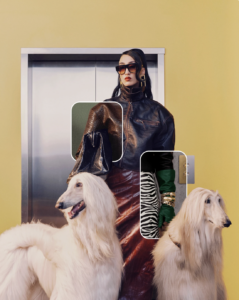
Picture a glossy magazine spread from 1986 with the saturation pushed all the way up. That is the target, reworked to read modern instead of like a costume.
The wearable version leans on one bold statement at a time, anchored by clean basics, so a shopper can buy into the look without going head to toe in gold.
This is maximalism, plain and simple. Opulence over restraint, gold over beige, one loud statement over ten quiet ones.
That matters if you sell print-on-demand. A named aesthetic with rising search data is an early demand signal, and you can design and list around it right now, before the rest of your niche catches on.
The sellers who win a trend are usually the ones already listed while search is still climbing.
Why the Glamoratti Trend Is Blowing Up in 2026
For the last few years, fashion has been whispering. Quiet luxury, stealth wealth, the minimalist clean-girl look: beige, unbranded, restrained.
Glamoratti is the swing back the other way. After seasons of playing it safe, the spotlight is on glamour again, the polished, jewelry-forward, power-dressed kind. Maximalism is back for 2026.
It is one of 21 trends in this year’s Pinterest report, and it is the loudest of the fashion picks.
Part of the pull is the nostalgia cycle. The ’80s are resurfacing across film, music, and the runway, and trend forecasters are already naming ’80s glam one of the defining looks of the year. When a look shows up on the catwalk and in your feed at the same time, it is ready to sell.
Here is why the timing works in your favor. Pinterest built the report to catch trends before they break, on the idea that what people search and save can forecast where retail is heading. That hands you a window to list ahead of the peak.
There is also a practical reason maximalism is good news if you sell online. Bold, high-contrast designs stop the scroll, and a loud thumbnail wins the click in a busy feed. A quiet, beige design has to work much harder just to get seen.
Bigger is selling again.
A single aesthetic like this one also sits inside a much larger set of opportunities. For the wider view, here are the top print-on-demand niches to watch in 2026.
The recurring visual cues to keep in your back pocket:
- Gold tones: foil, brass, metallic type, anything that gleams.
- Jewel colors: emerald, sapphire, ruby, deep amethyst.
- Glossy textures: lacquered, patent, high-shine surfaces.
- Bold silhouettes: big shoulders, strong lines, statement shapes.
Why Gen Z and Millennials Are All In on Glamoratti
The generational split is the interesting part. Pinterest pins the Glamoratti Pinterest trend on Gen Z and Millennials, and each group arrives through a different door.
Millennials lived through the tail end of ’80s culture, so the nostalgia is direct. Gen Z is rediscovering the decade secondhand and remixing it into something that feels new.
Gen Z tends to want the remix, a wink at the ’80s rather than a straight copy. Millennials are usually happy with the real thing. A collection that offers both a playful take and a polished one covers more of the room.
Both groups are also done with minimalism for the moment. They are leaning into bold self-expression and dopamine dressing, choosing clothes and objects that feel good and get noticed.
That is a gift for sellers, because these are the exact people who plan and save on Pinterest before they spend. A save is a signal of intent, and intent is what turns into orders.
Pinterest is a planning platform. A Glamoratti pin someone saves in January is a purchase they are teeing up for a party or a spring wardrobe refresh.
So take the practical cue. Everything you write and show should read confident, playful, and opulent.
In plain terms, write like the trend sounds. Words like bold, glam, statement, and decadent belong in your titles and descriptions, not buried in the fine print.
What People Are Actually Searching For
You do not have to guess what an ’80s maximalist aesthetic looks like in a search bar. Pinterest published the numbers, comparing normalized searches from late 2024 into 2025 against the year before.
| Search Term | Search Growth |
|---|---|
| 80s luxury | +225% |
| baggy suit | +90% |
| chunky belt | +65% |
| high collar jacket | +60% |
| gold cuff | +50% |
Those figures come straight from Pinterest’s own data, and the ’80s luxury trend is the standout, with jewelry set to get chunkier and bolder to match.
The size of each jump tells you where to aim. ’80s luxury and baggy suit are the runaway terms, so lead with opulent scenes and oversized, structured shapes.
These phrases are still labeled not-yet-trending, which is the whole point. Getting your listings indexed against them now is far easier than it will be once every shop piles in.
Each search term is a design brief in disguise:
- 80s luxury: opulent styled backdrops with marble, velvet, and brass.
- baggy suit: oversized, sculpted-shoulder silhouettes on apparel mockups.
- chunky belt: heavy hardware, gold buckles, bold accessory styling.
- high collar jacket: funnel necks and structured collars in your model shots.
- gold cuff: metallic accents, gold foil type, jewelry props in the frame.
Pair each one with a product and you have a listing plan without a brainstorm.
Now mirror that language where buyers find you. Put these exact phrases in your product titles, tags, and pin descriptions, because the words shoppers type should be the words that show up in your listing.
A title like “Gold Cuff ’80s Luxury Glam Tee” looks blunt, and that bluntness is what gets it found. Save the clever wordplay for the design itself.
Pinterest is the obvious channel here, so build pins that sell. Clean, styled Pinterest product pin mockups do the heavy lifting while a shopper is still in the saving-and-planning phase.
And treat it like a moment, not an evergreen line. Search interest is climbing now, so use mockups for a limited, trend-timed collection and ride the wave while it is cresting.
How We Turned Glamoratti Into Product Mockups
The fastest way to understand a trend is to put it on a product. Here is how the Glamoratti aesthetic maps onto five things POD sellers already list.
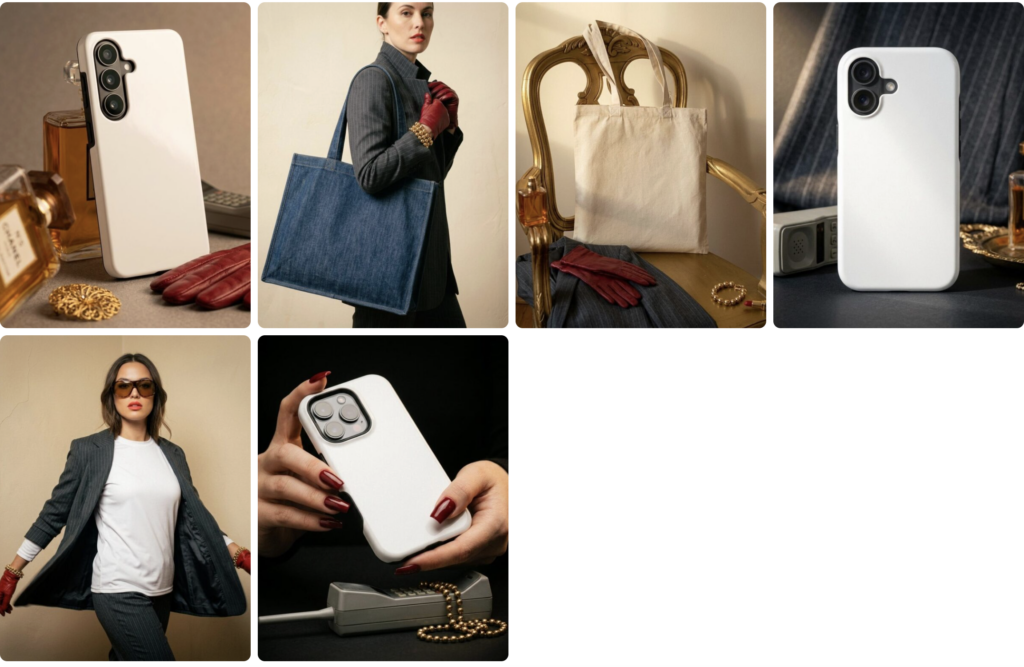
These five are the print-on-demand workhorses, cheap to test and quick to bring to market.
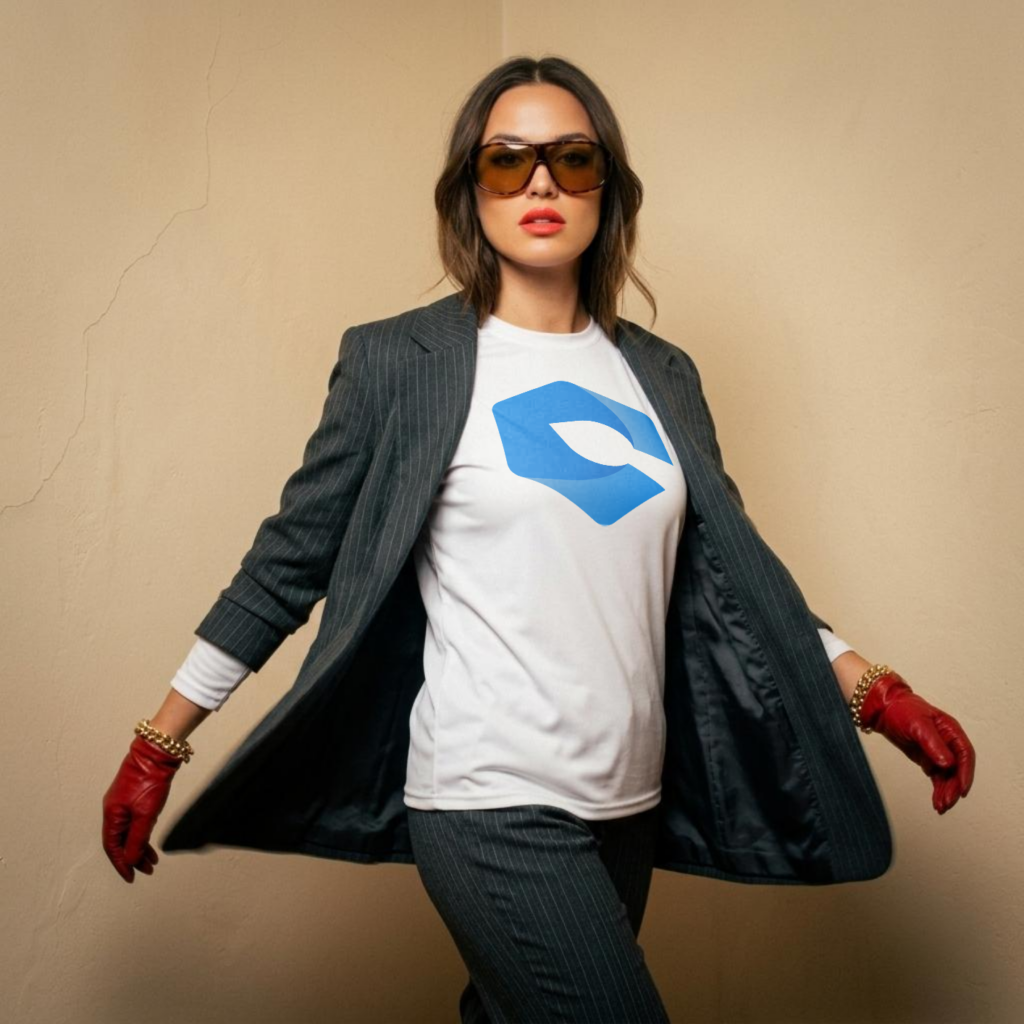
- T-shirts: gold foil-look lettering and ’80s script on black or jewel-tone tees.
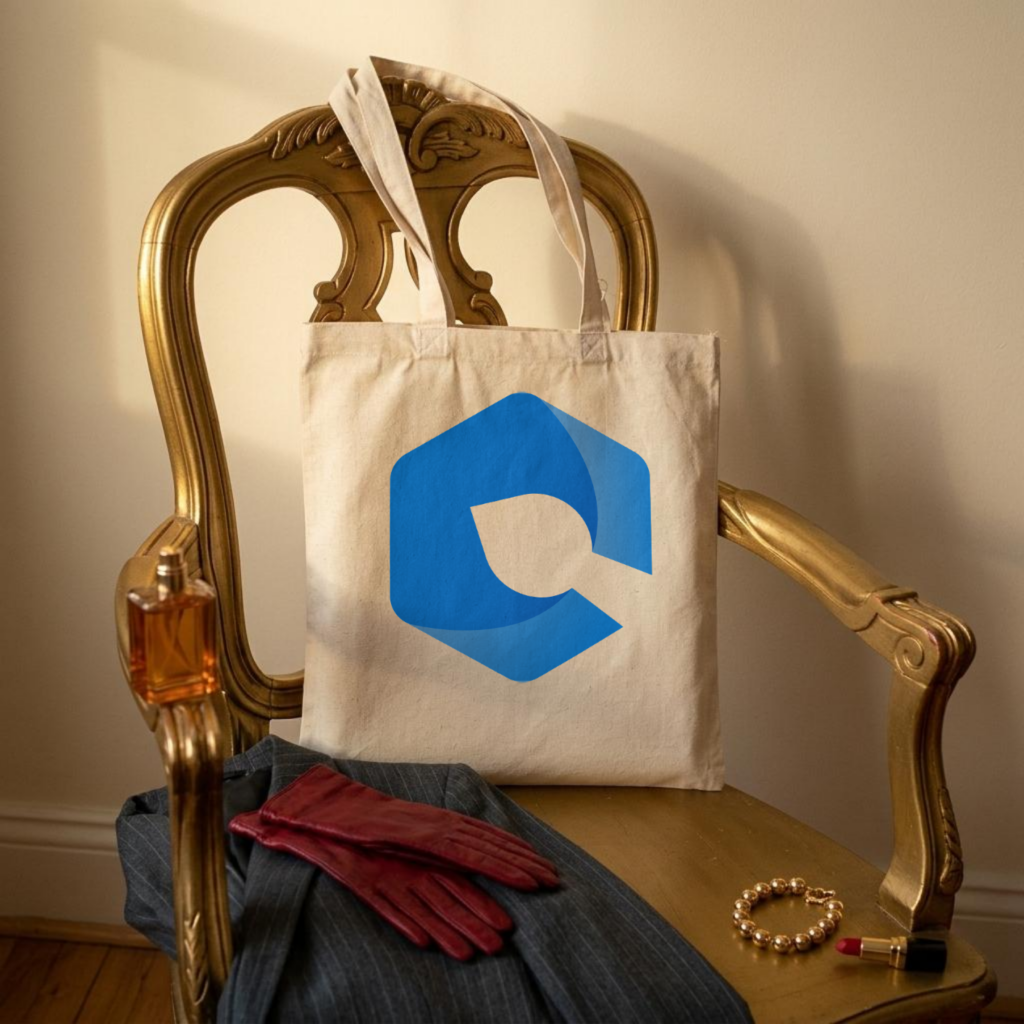
- Tote bags: leopard and animal print with bold gold type, styled like a boutique carry-all.
- Phone cases: animal print, marble, and metallic edges for a high-shine finish.
- Wall art: art deco line work in jewel tones, framed for a maximalist gallery wall.
- Mugs: glossy black-and-gold, the kind that looks expensive on a marble counter.
You do not have to make all five. Pick two or three, hold one gold-and-jewel palette across the set, and the collection reads intentional instead of scattered.
Lean on texture to sell the price point. Marble, velvet, brass, and high-shine black all photograph expensive.
You also do not need new blanks to start. Pick any product mockup from our free library of mockups in Glamoratti aesthetic and try it out with your artwork.
Then group the finished mockups into one collection on your storefront, so shoppers see the whole look rather than one lonely mug.
One more note on strategy. Because this trend has a clock on it, treat the release like a drop. If you want a repeatable playbook, here is how to plan a successful fashion product launch around a single aesthetic.
MockAnything AI Prompts to Create Your Own Glamoratti Scenes
If you already have a product photo, you can skip the studio entirely. Our MockAnything AI mockup generator turns any product image into a reusable, on-brand mockup, so you can build a full Glamoratti scene without opening Photoshop.
It works from a single photo. Upload your product once, and MockAnything turns it into a template you can restyle again and again as the trend shifts.
You can also create mockups just from a prompt using the MockAnything AI tool.
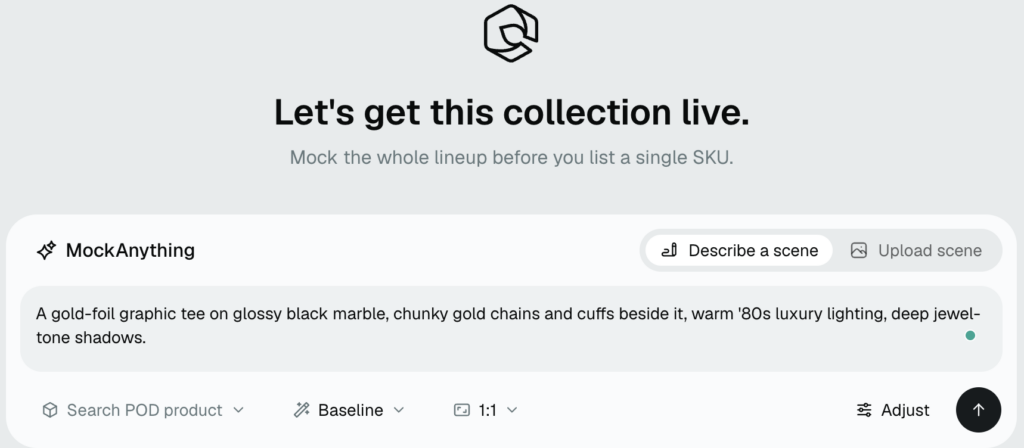
The trick is in the prompt. Bake the trend cues into every one: gold accents, ’80s luxury lighting, jewel tones, glossy or lacquered surfaces, chunky jewelry, and padded shoulders. Copy these, swap in your product, and adjust to taste:
- T-shirt: “A gold-foil graphic tee on glossy black marble, chunky gold chains and cuffs beside it, warm ’80s luxury lighting, deep jewel-tone shadows.”
- Tote bag: “A canvas tote with leopard print and bold gold lettering, displayed in a maximalist ’80s boutique, brass fixtures and mirrored surfaces, high-shine finish.”
- Wall art: “A framed art deco print in emerald and gold, hung above a velvet sofa, brass accents and a lacquered side table, opulent maximalist living room.”
- Hoodie: “An oversized hoodie with sculpted, padded shoulders on a matte mannequin, gold jewelry props nearby, glossy black backdrop, dramatic ’80s studio lighting.”
- Phone case: “A glossy phone case with a marble and gold-veined pattern, resting on a mirrored tray with chunky gold rings, warm luxe lighting, jewel-tone reflections.”
- Blanket: “A jewel-tone throw blanket draped over a velvet sofa, brass floor lamp and gold decor around it, cozy but opulent ’80s glamour, soft warm light.”
- Pillow: “A sapphire velvet throw pillow with gold piping on a tufted sofa, lacquered surfaces and brass accents, rich maximalist styling, high-shine detail.”
Keep your brand fonts and colors consistent across every scene, so the set looks like a line and not a grab bag.
Run each prompt a few times and keep the strongest frame, the way you would cull a photoshoot. Tweak the color, the surface, or the props, and you have a full set of Glamoratti product mockups from a single afternoon.
Start building your Glamoratti collection while search interest is still climbing →
Showcase your E-commerce products like big brands, without costing a fortune. Sign up today. No credit card required.
Frequently Asked Questions
What is the Glamoratti trend for 2026?
Glamoratti is Pinterest’s name for the return of loud, decadent ’80s power dressing. Think chunky gold jewelry, sculpted padded shoulders, funnel necklines, and jewel tones. It is maximalism rebuilt for now: opulence over restraint, gold over beige. Pinterest calls the ’80s the decade of decadence, and Glamoratti is that mood reworked to read modern instead of like a costume.
Where did the Glamoratti trend come from?
It comes straight from the Pinterest Predicts 2026 report, one of 21 trends Pinterest named for the year and the loudest of the fashion picks. Pinterest builds the report to catch trends before they break, using what people search and save to forecast retail. The ’80s revival is also showing up across film, music, and the runway, which is why it is ready to sell.
What does the Glamoratti aesthetic look like?
Picture a glossy 1986 magazine spread with the saturation pushed all the way up. The recurring cues are gold tones (foil, brass, metallic type), jewel colors (emerald, sapphire, ruby, amethyst), glossy textures (lacquered, patent, high-shine), and bold silhouettes (big shoulders, strong lines). The wearable version leans on one bold statement at a time, anchored by clean basics, so shoppers buy in without going head to toe in gold.
What products can I sell for the Glamoratti trend?
Start with the print-on-demand workhorses, cheap to test and quick to launch: t-shirts with gold foil-look lettering, tote bags in leopard print and bold gold type, phone cases with marble and metallic edges, art deco wall art in jewel tones, and glossy black-and-gold mugs. Pick two or three, hold one gold-and-jewel palette across the set, and the collection reads intentional instead of scattered.
How do I create Glamoratti product mockups without Photoshop?
Use Dynamic Mockups. Pick your base products from the free library of 100,000+ templates, then use the AI Background Generator to drop each into an opulent scene and the Bulk Mockup Generator to render the whole set at once. Already have a product photo? MockAnything AI turns it into a reusable mockup you can restyle as the trend shifts. It is free, no credit card required.